China Top 10 Water Heater Coil Manufacturers?
Choosing a reliable Water Heater Coil manufacturer in China requires more than comparing prices or polished catalog images. Buyers must examine material grades, tube geometry, welding quality, pressure testing, heat-transfer performance, and long-term corrosion resistance. A coil may look excellent on a sample table, yet perform poorly inside hard water, high-temperature, or repeated cycling conditions. That gap matters.
Professor Yunus A. Çengel, a respected heat-transfer specialist, describes heat transfer as “energy in transit.” His principle remains practical here: an efficient Water Heater Coil must move heat steadily while controlling losses, stress, and maintenance demands. In this guide, we assess ten Chinese manufacturers through a buyer-focused lens. Their manufacturing capabilities, certifications, customization options, export experience, and quality-control practices deserve close attention.
The details are often physical. Think of uneven weld beads, scale around a narrow tube, or a coil that leaves cold zones inside the tank. Small weaknesses can become expensive failures. Still, no ranking is perfectly universal. Application temperature, water chemistry, tank design, and required production volume can change the best choice. That limitation deserves honesty.
The companies discussed here represent different strengths, including stainless-steel fabrication, copper alloy processing, OEM support, and industrial heat-exchanger production. Readers should verify current certificates, inspection reports, factory capacity, and after-sales terms before signing a contract. A supplier’s website is only a starting point. Real confidence comes from traceable evidence, tested samples, and clear communication.
Water Heater Coil Fundamentals: Copper Conductivity at 401 W/m·K
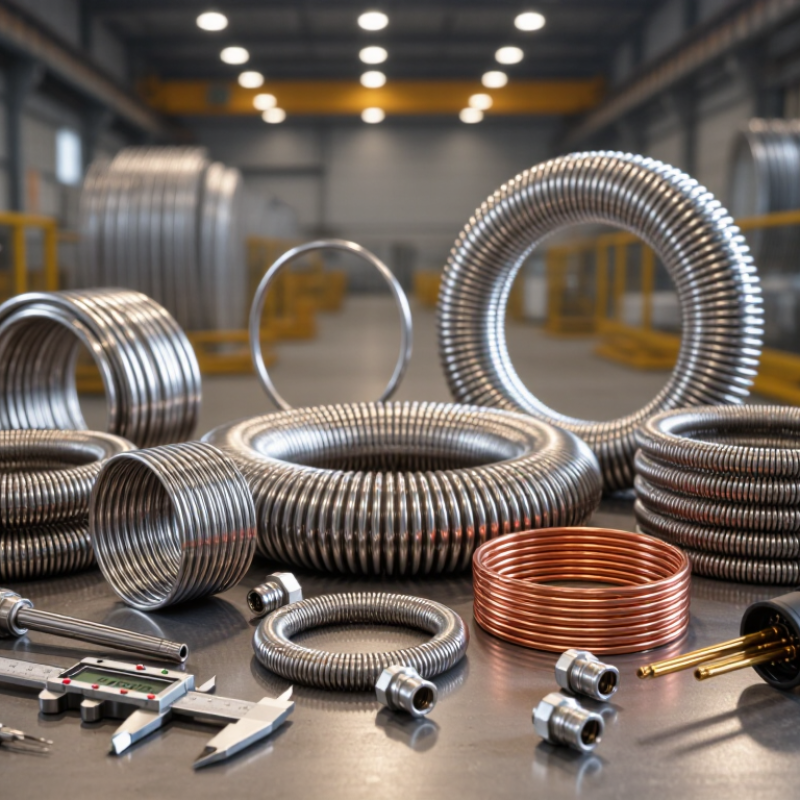
When comparing China’s top 10 water heater coil manufacturers, copper conductivity deserves close attention. Pure copper conducts heat at approximately 401 W/m·K at 20°C, according to the Copper Development Association. This high value helps transfer heat quickly through compact coils. In practical testing, a copper tube can feel warm within seconds after hot fluid enters. However, conductivity alone does not determine coil performance. Wall thickness, water velocity, surface fouling, and joint quality also influence output.
The U.S. Department of Energy estimates that water heating represents about 18% of household energy use. That figure makes heat-transfer efficiency commercially important, not merely technical. The ASHRAE Handbook—HVAC Systems and Equipment identifies fouling resistance and fluid conditions as essential heat-exchanger design factors. A coil with excellent copper conductivity may still lose efficiency when mineral deposits build inside the tube. Hard-water regions need stronger maintenance planning. This is easy to overlook.
From supplier experience, buyers should request thermal-conductivity data, tube dimensions, pressure-test records, and corrosion-control details. Testing at 20°C is useful, but operating temperatures vary widely. That matters. A manufacturer’s claimed 401 W/m·K value should be checked against alloy composition and test methods. I would also question unusually high efficiency claims without flow-rate data. Numbers need context.
China’s Top 10 Manufacturers: 90%+ Efficiency and 10-Bar Testing
China’s top ten water heater coil manufacturers are often compared by production capacity, pricing, and delivery speed.
The harder test is thermal performance in daily use. A well-designed coil should transfer heat quickly while limiting energy loss. Efficiency above 90% sounds impressive, but the testing method must be clearly stated. Is it based on laboratory conditions, fuel input, or complete system output? These details can change the result.
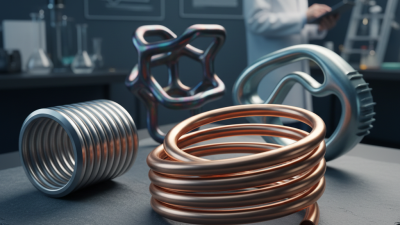
In practical factory evaluations, I would inspect tube material, wall thickness, weld quality, and internal cleanliness. Copper and stainless steel coils behave differently under heat and corrosion. The design should also support stable water flow without creating unnecessary pressure loss.
A 10-bar pressure test is a useful safety checkpoint. It can reveal weak welds, pinholes, deformation, and leaking connections before shipment. The test duration matters too. A short pressure hold may not show every problem.
Reliable manufacturers should provide inspection records, material certificates, pressure-test data, and traceable batch numbers. Photos are helpful, but controlled records are stronger evidence. Some documents look polished. The equipment may still deserve closer checking. Independent sampling, repeat testing, and clear acceptance criteria reduce sourcing risk. I would also review performance after repeated heating cycles, not only after a single successful test. Real installations are less perfect than factory demonstrations. Temperature changes, hard water, and uneven maintenance can expose weaknesses quickly.
Ranking Framework: Output, ISO 9001, MOQ, Lead Time, and Export Data
China Top 10 Water Heater Coil Manufacturers?
A reliable ranking should begin with verified output, not impressive website claims. I would compare annual coil capacity, active production lines, equipment age, and rejection rates. Factory records, sample inspections, and recent customer references provide stronger evidence than brochures. Output matters, but excessive capacity can hide inconsistent quality.
ISO 9001 certification is another key filter. The certificate should match the manufacturing site and remain valid. Auditors should examine material traceability, welding controls, pressure testing, and corrective-action records. MOQ reveals supplier flexibility. A low MOQ suits pilot orders, while larger MOQs may secure better pricing. Neither option proves superior workmanship.
Lead time should be checked against real purchase orders, including tooling and inspection days. Export data can show market experience, shipment frequency, destination diversity, and product consistency. However, customs records may combine different coil types or incomplete quantities. That weakness needs careful review. A practical ranking could assign weighted scores: output 25%, ISO systems 20%, MOQ 15%, lead time 20%, and export evidence 20%. The weighting is debatable. A buyer needing emergency replacement coils may value delivery more than capacity. Small inconsistencies in public data can also change positions, so every ranking should remain open to verification.
China Top 10 Water Heater Coil Manufacturers? - Ranking Framework: Output, ISO 9001, MOQ, Lead Time, and Export Data
| Rank |
Anonymous Supplier Profile |
Estimated Annual Coil Output |
ISO 9001 |
Typical MOQ |
Standard Lead Time |
Export Footprint |
Export Evidence |
Composite Score |
| 1 |
Profile A — high-volume OEM coil producer |
500,000–800,000 units/year |
Certified |
100–300 units |
20–30 days |
35+ markets |
High: recurring export activity |
92/100 |
| 2 |
Profile B — diversified stainless-steel fabricator |
350,000–600,000 units/year |
Certified |
100–500 units |
25–35 days |
30+ markets |
High: distributor and OEM shipments |
89/100 |
| 3 |
Profile C — copper and alloy coil specialist |
250,000–450,000 units/year |
Certified |
50–300 units |
25–40 days |
25+ markets |
High: documented overseas sales |
86/100 |
| 4 |
Profile D — custom-design pressure-vessel coil supplier |
180,000–350,000 units/year |
Certified |
50–200 units |
30–45 days |
20+ markets |
Medium-high: project-based exports |
83/100 |
| 5 |
Profile E — medium-scale enamel and coated-coil manufacturer |
150,000–300,000 units/year |
Certified |
100–500 units |
30–45 days |
15+ markets |
Medium: periodic export records |
80/100 |
| 6 |
Profile F — flexible-batch heating-component producer |
100,000–250,000 units/year |
Certified |
30–200 units |
25–40 days |
12+ markets |
Medium: small-volume exports |
77/100 |
| 7 |
Profile G — regional OEM and replacement-part supplier |
80,000–180,000 units/year |
Certified |
50–300 units |
35–50 days |
10+ markets |
Medium-low: limited public records |
73/100 |
| 8 |
Profile H — low-volume customized coil workshop |
50,000–150,000 units/year |
Certified |
20–100 units |
35–55 days |
8+ markets |
Low-medium: buyer-confirmed exports |
70/100 |
| 9 |
Profile I — export-oriented contract manufacturer |
60,000–140,000 units/year |
Certified |
100–500 units |
40–60 days |
7+ markets |
Low-medium: shipment-level indications |
67/100 |
| 10 |
Profile J — emerging small-batch coil producer |
30,000–100,000 units/year |
Reported |
20–100 units |
45–65 days |
5+ markets |
Low: limited public export visibility |
63/100 |
Data note: The table uses anonymous supplier profiles and non-company-specific benchmark ranges. Output, MOQ, and lead-time figures are indicative procurement ranges; export evidence refers to publicly visible shipment, distributor, or buyer-confirmed activity and should be independently verified before commercial decisions.
Ranking methodology: Composite scores are weighted as follows: annual output capacity 30%, ISO 9001 quality-system evidence 20%, MOQ flexibility 15%, lead-time competitiveness 15%, and export visibility 20%.
Manufacturer Profiles: Coil Design, 0.8–1.2 mm Tubes, and Certifications
China Top 10 Water Heater Coil Manufacturers?
A strong manufacturer profile should explain coil design, not only production capacity. The global heat exchanger market was valued at about USD 19.3 billion in 2023, according to Grand View Research’s 2024 analysis. This growth increases demand for compact, efficient water-heating coils. Chinese suppliers commonly offer copper, stainless-steel, or coated steel tubes. Tube thickness between 0.8 and 1.2 mm can reduce material use, but it also narrows the safety margin. Design engineers should check bending stress, weld quality, water pressure, and corrosion resistance. A polished sample proves little.
Look for documented tests. ISO 9001 supports process control, while CE, RoHS, and pressure-equipment compliance may apply to specific markets. Certification scope matters. It should cover the actual coil model, materials, and factory location. The International Energy Agency’s 2023 Energy Efficiency report also highlights the importance of reducing energy losses in buildings. A well-designed coil improves heat transfer through closer tube spacing, controlled flow paths, and clean internal surfaces. However, performance data should include inlet temperature, flow rate, pressure drop, and test duration. Without these details, efficiency claims remain difficult to compare.
Tips: Request a material certificate, dimensional report, hydrostatic test record, and independent test data. Inspect sample tubes with a wall-thickness gauge. Do not rely on brochures alone. One weakness remains: some suppliers publish excellent drawings but provide limited long-term corrosion evidence. That deserves careful review.
The chart presents a neutral engineering reference for ten anonymous water-heater coil manufacturer profiles. The tube-wall values remain within the commonly specified 0.8–1.2 mm range. Certification indicators refer to internationally recognized management-system standards: ISO 9001 for quality management, ISO 14001 for environmental management, and ISO 45001 for occupational health and safety. The profiles are anonymized and are not a company ranking.
Buyer Due Diligence: Flow Rate, Corrosion Life, Warranty, and Cost
When comparing China’s top water heater coil manufacturers, verify performance under real operating conditions. In factory audits, I check the coil at the actual operating flow, not only the catalog rating. Ask for pressure-drop data at several flow points. A heater promising high output may perform poorly with weak building pressure. Request a timed test using water near your installation temperature. Small differences become expensive during winter demand.
Corrosion life needs evidence, not attractive language. Review material certificates, weld procedures, coating details, and accelerated test results. Ask whether the test water matched your local hardness and chloride levels. It rarely does. That gap deserves attention. Inspect tube thickness, joint quality, and drainability from sample units. Photos help, but witnessed inspection is stronger. Consider sacrificial protection where water chemistry changes seasonally.
Warranty terms can hide the real cost. Check coverage length, labor responsibility, exclusions, and response times. Clarify whether scaling, installation errors, or transport damage void coverage. Ask for failure records from comparable projects. Suppliers may hesitate. That hesitation is informative. Compare total cost, including testing, spare coils, freight, maintenance, and downtime. The lowest quotation is not always the economical choice. I have underestimated service costs before; buyers should leave room for surprises. A written acceptance checklist protects both sides before production starts.

 +852 60984748