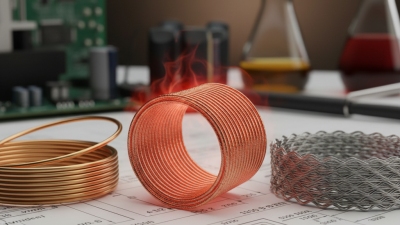
How to Choose the Right Water Heater Coil for Your Needs
Choosing a Water Heater Coil is not just a matter of matching a part to a tank. The coil must suit the heat source, water demand, available space, and system design. A coil for an indirect water heater transfers heat from a boiler or other source through a heat exchanger. Solar thermal systems use different design requirements. The details matter.
The U.S. Department of Energy’s Energy Saver guidance estimates that water heating accounts for about 18% of a typical home’s energy use. That makes coil selection relevant to operating costs, not merely installation. Still, a larger coil is not automatically better. Material, surface area, flow rate, pressure limits, and water quality all affect performance and service life. Hard water can leave mineral deposits on heat-transfer surfaces. Those deposits may reduce heat transfer, even when the coil initially seemed well matched.
A sound comparison starts with the heater and heat-source specifications. Check the manufacturer’s rated output, connection sizes, temperature limits, and compatibility notes. Where available, consult recognized certification listings and independent product documentation. Ask an experienced installer to confirm the design against real household demand. Small details count. A coil that fits the tank may still perform poorly if its heat source or flow conditions are wrong. There is no universal best choice, and product claims deserve a careful second look. This guide explains the practical differences and the questions to ask before choosing a Water Heater Coil.
Understanding How a Water Heater Coil Transfers Heat
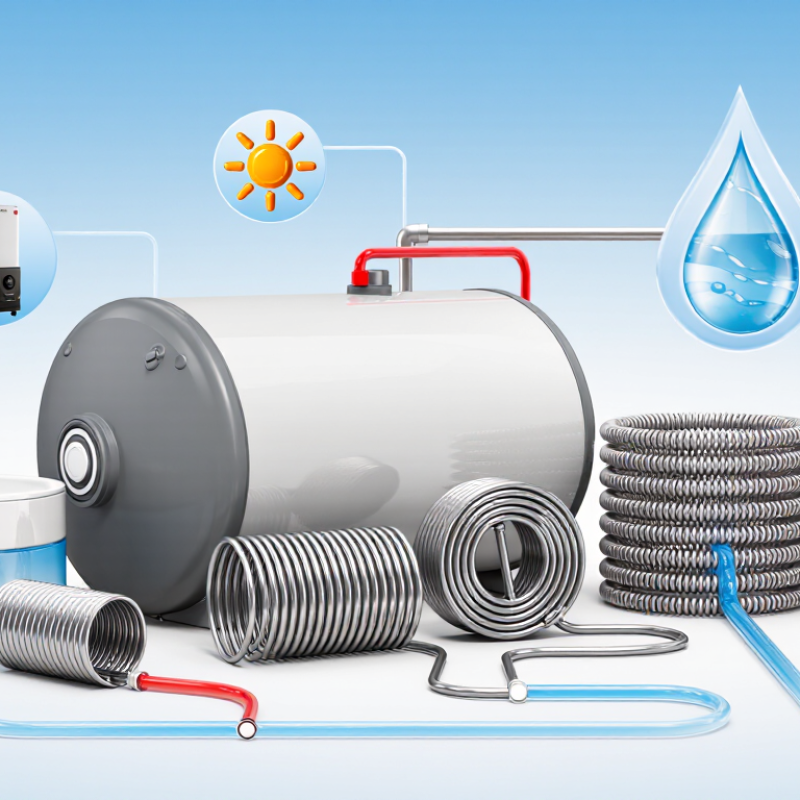
A water heater coil transfers heat through a metal surface, not by mixing fluids. Hot water, steam, or another heated liquid flows inside the coil. Heat then moves through the coil wall and warms the surrounding tank water. The process depends on temperature difference, surface area, flow rate, and metal conductivity.
Copper coils transfer heat quickly and respond well to changing demand. Stainless steel coils usually offer stronger corrosion resistance, especially where water quality is uncertain. Material is only one part of the decision. Coil shape also matters. A wider coil can expose more surface area, while tight bends may restrict flow and collect scale. Check the pipe diameter and connection type carefully.
Scale acts like a blanket. Even a thin layer can slow heat transfer and increase recovery time. In practical inspections, technicians often compare outlet temperature, flow, and visible deposits before replacing a coil. A coil that feels hot but heats the tank slowly may have poor contact, restricted circulation, or heavy buildup. Do not blame the heater immediately.
Sizing requires honest attention to demand. A small household may need less recovery capacity than a property with several showers running together. However, choosing the largest coil is not automatically better. Oversizing can increase cost and create control problems. Water chemistry, maintenance access, operating temperature, and safety controls deserve equal consideration. I would also leave room for uncertainty, because actual usage rarely matches the original estimate.
Identifying Coil Types and Their Heat Sources
How to Choose the Right Water Heater Coil for Your Needs
Identifying the coil type starts with the heat source. An immersion coil uses electric resistance and sits directly inside the tank. It heats water quickly, but mineral scale can reduce its performance. An indirect coil transfers heat from a boiler through a sealed loop. This design suits homes with existing hydronic heating systems. Tankless units use compact heat exchangers instead of stored coils, requiring strong gas burners or high electrical capacity.
Heat pump water heaters use a refrigerant coil to move heat from surrounding air. The U.S. Department of Energy reports that they can be two to three times more efficient than standard electric resistance models. That difference matters because the U.S. Energy Information Administration identifies water heating as roughly 18% of household energy use. Solar systems usually connect to a coil inside a storage tank, with an electric or gas backup for cloudy days. The backup is not optional in many climates.
Tips: Match coil material with your water chemistry. Stainless steel resists corrosion, while copper transfers heat efficiently but may react poorly with certain water conditions. Check recovery rate, voltage, tank size, and service access. A larger coil is not automatically better. In real installations, undersized wiring or hard water often causes more trouble than the coil itself. I would also question any efficiency claim that lacks test conditions. Ratings can look impressive, yet household demand remains unpredictable.
How to Choose the Right Water Heater Coil for Your Needs — Identifying Coil Types and Their Heat Sources
| Coil Type |
Typical Heat Source |
How It Heats Water |
Best Suited For |
Key Considerations |
| Indirect water-heater coil |
Hot-water boiler, commonly fired by gas, oil, or electricity |
A closed-loop boiler circuit circulates hot fluid through a heat-exchanger coil inside a separate storage tank. |
Homes that already have a boiler and need stored domestic hot water. |
Tank capacity, coil heat-transfer rating, boiler output, and control compatibility should be matched. The boiler fluid and domestic water remain separated. |
| Tankless coil |
Boiler used for space heating |
Domestic water flows through a coil installed inside the boiler and is heated as it passes through. |
Existing boiler systems with modest or intermittent hot-water demand. |
Output depends on boiler temperature and flow rate. Hot-water availability may be limited during heavy simultaneous use, and the boiler may run to maintain temperature outside the space-heating season. |
| Single solar-thermal coil |
Solar thermal collectors circulating heat-transfer fluid |
Solar-heated fluid passes through a coil in a storage tank, transferring heat to the domestic water. |
Buildings with suitable solar exposure and a compatible solar-thermal system. |
Solar heat varies with season and weather. A separate backup heater is commonly used when solar input is insufficient. |
| Dual-coil solar tank |
Solar thermal collectors plus a boiler or other auxiliary heat source |
One coil receives solar heat, while a second coil connects to a backup heating system. |
Systems designed to use solar heat first and provide auxiliary heating when needed. |
Check each coil’s heat-transfer capacity, connection layout, and control sequence. The coils serve separate circuits and should not be assumed interchangeable. |
| Replacement coil for an existing tank or boiler |
The original system’s heat source, such as a boiler or solar circuit |
A replacement heat exchanger transfers heat using the same basic circuit arrangement as the original installation. |
Repair or maintenance where the appliance is designed for a replaceable coil. |
Confirm dimensions, material, connection size, pressure and temperature ratings, and appliance compatibility before replacement. Some tanks have non-replaceable coils. |
Selection note: Choose a coil based on the existing heat source, required hot-water demand, tank or boiler compatibility, and local installation requirements. A qualified heating professional can verify sizing and safe system operation.
Matching Coil Size and Capacity to Your Hot Water Demand
How to Choose the Right Water Heater Coil for Your Needs
Choosing a water heater coil starts with your real hot water demand. Do not rely only on the heater’s maximum output. List the fixtures used at the same time, such as showers, sinks, and washing machines. Record their flow rates in gallons per minute. A standard shower may use about 2.0 gallons per minute, but fixtures differ. Measure twice.
You also need the required temperature rise. Subtract the incoming water temperature from your target outlet temperature. The basic heating estimate is
Q = 500 × GPM × temperature rise,
producing an approximate BTU per hour requirement. The coil should meet this demand without operating continuously at its limit. A modest capacity margin can help during busy periods. However, a larger coil cannot compensate for an undersized boiler or poor water flow.
Match the coil’s surface area, connection size, and pressure-drop rating with the complete system. A small coil may deliver lukewarm water when several taps run together. An oversized coil may increase cost without improving performance if the heat source lacks capacity. Storage volume matters, too. A smaller tank needs faster recovery, while a larger tank can handle short demand spikes. It is tempting to size from average daily use, but morning demand is usually more revealing. This estimate may still be imperfect, especially in homes with changing occupancy. Recheck the calculation after installation data becomes available.
Evaluating Installation Requirements, Safety, and Operating Costs
How to Choose the Right Water Heater Coil for Your Needs
A suitable coil begins with the installation, not the advertised output.
Check the tank’s coil opening, thread size, available voltage, water pressure, and heat-transfer fluid. The exchanger material must also match the water chemistry. Hard water can build scale around the coil and reduce heat transfer. A practical inspection should include pipe clearance, insulation, grounding, and access for future cleaning. Local plumbing and electrical codes still control the final installation.
Safety deserves equal attention.
The U.S. Consumer Product Safety Commission recommends setting residential water heaters near 120°F to reduce scald injuries. A tempering valve can mix hot and cold water before delivery. The system should also include a functioning temperature-and-pressure relief valve. ASHRAE Standard 188 highlights the need for water-management plans where Legionella risks may exist. That standard is not a substitute for professional design. Small oversights matter.
Operating cost depends on coil wattage, runtime, insulation, and scale.
The U.S. Department of Energy reports that water heating represents about 18% of household energy use. ENERGY STAR reports that heat-pump water heaters can use two to three times less energy than standard electric resistance models. Those figures are useful, but not universal. A larger coil may heat faster while increasing peak demand. I would compare annual energy estimates, not only purchase price. Real installations are messier. Temperature habits, mineral deposits, and imperfect insulation can change the result.

 +852 60984748